
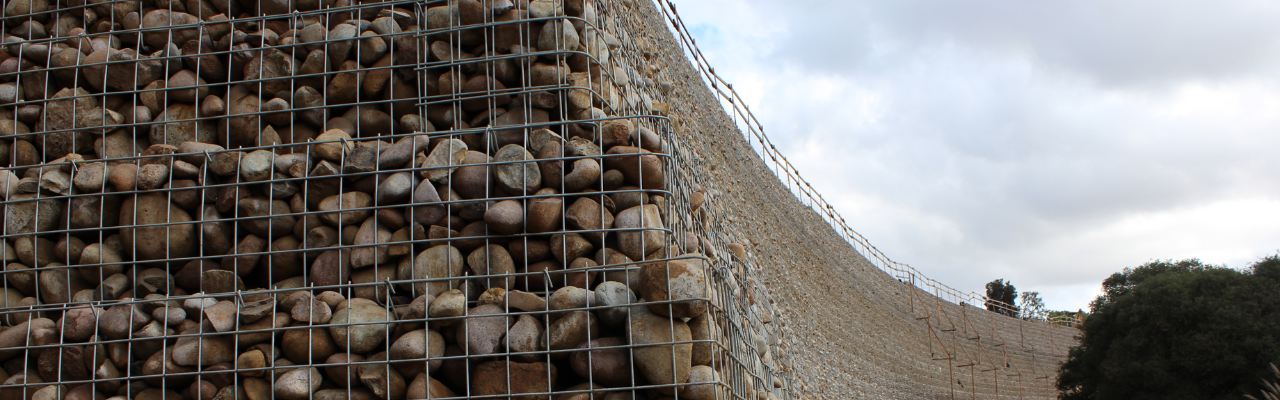
MSE Wall & Slope Systems
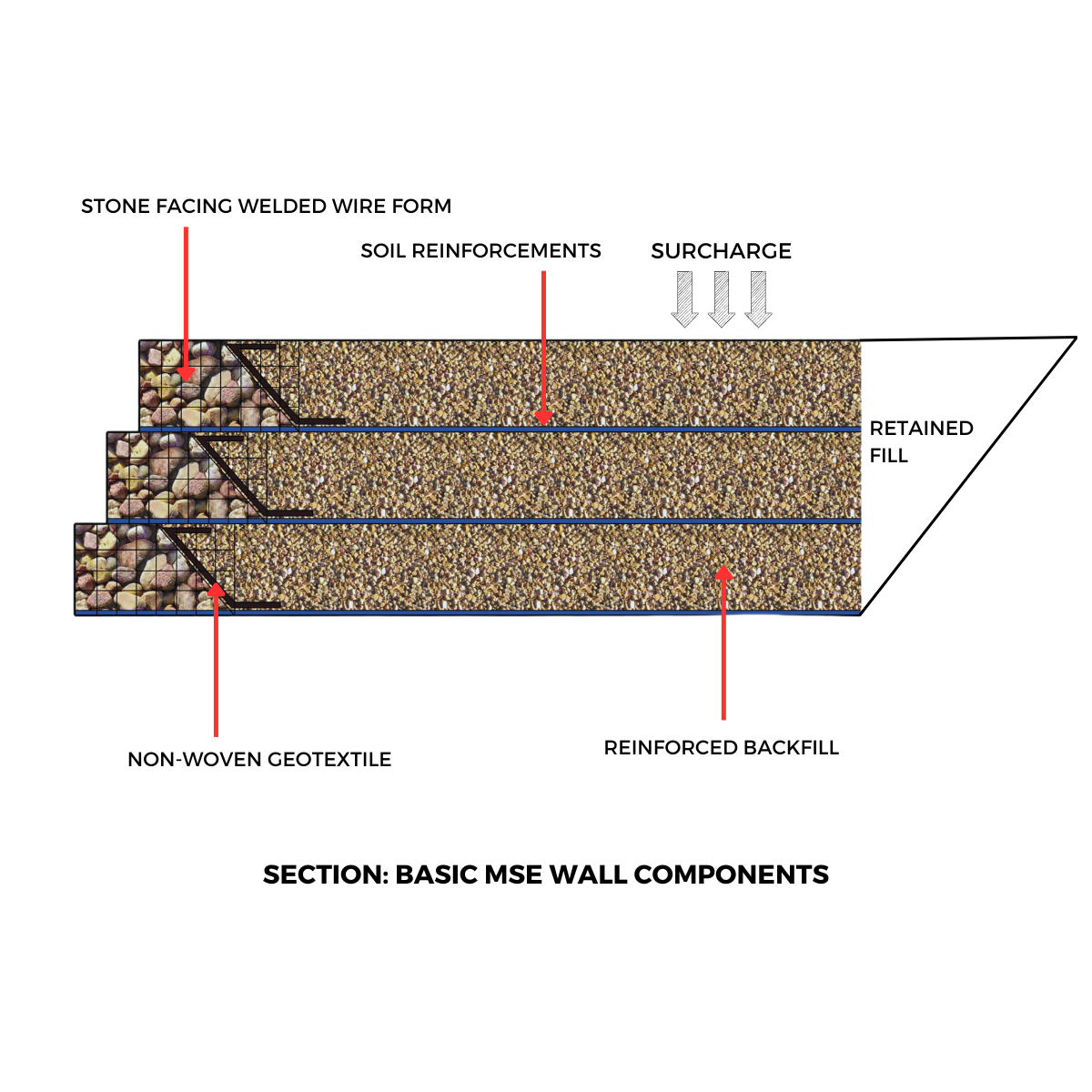
Mechanically stabilized earth (MSE) walls and slopes are composite structures consisting of alternating layers of compacted aggregate backfill and geosynthetic reinforcement working as a system to create a stable earthen wall structure.
An MSE slope is considered a uniaxial geogrid-reinforced soil structure with a slope inclination of up to 70 degrees, whereas an MSE wall is a uniaxial geogrid-reinforced soil structure over 70 degrees.
In an MSE wall or slope system, the soil reinforcement and backfill interaction results in friction and tension that produces stability. The wall facing is mainly for aesthetics and prevents erosion of the structural backfill behind the facing element.
MSE wall and slope systems are an economical, flexible solution to accommodate the changes in grade during infrastructure construction. Compared to conventional concrete structures, MSE walls and slopes can tolerate greater differential settlement, allowing for less rigid, unyielding foundation support. This makes MSE solutions ideal for both temporary and permanent applications.
Product Brochure
MSE Wall & Slope Solutions
MSE Guide: Cut Project Costs and Meet Sustainability Goals
More Information
Ask the Expert – FAQ
Titan GeoChat Video

MSE Applications
- Bridge abutments
- Steepened slopes
- Mining crusher walls
- Surcharge embankment structures
- Temporary detour roads for traffic diversion
MSE System Benefits
- Simple, quick, and easy to install without experienced or unique skilled labor.
- Can accommodate curves, steps, and height changes around bridge and culvert structures.
- Can be built vertically or with a setback to accommodate any slope angle.
- Can accommodate both vegetated and hard armored facing options for desired aesthetic requirements.
Titan MSE Wall & Slope Solutions
Titan’s MSE solutions are categorized into two main systems:
- Titan Earth Wall® MSE Systems
- Titan Earth Slope® MSE Systems
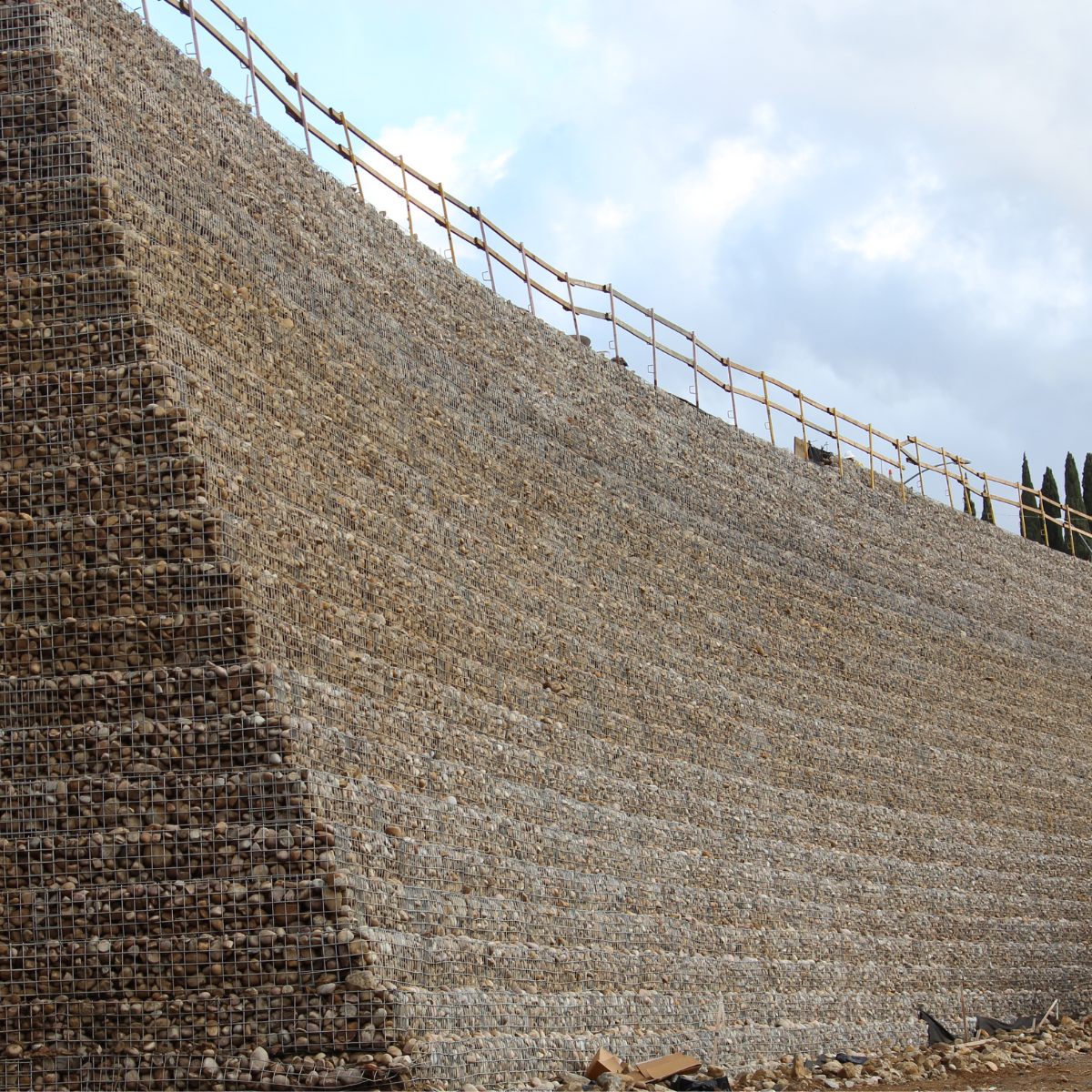
Depending on the specific project needs, these systems offer various benefits and design options. Factors such as application, aesthetics, natural environment, and service life will influence the choice of the mechanically stabilized earth system required.
Titan offers professional value-engineered MSE system solutions backed by our in-house MSE engineering team focused on MSE applications. We provide engineering support, drafting, and engineered stamped drawings to ensure your project and investments are protected.
Wall MSE Systems
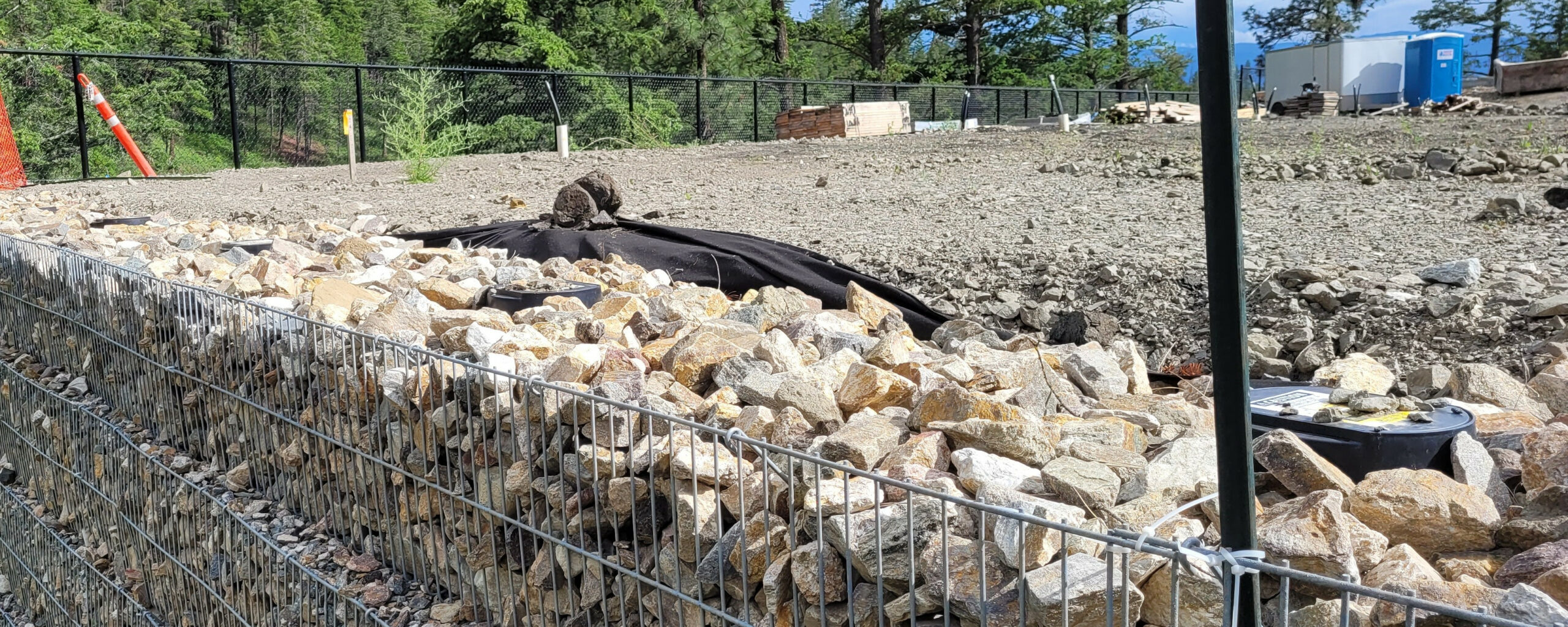
Titan Earth Wall®
Titan Earth Wall® MSE Systems provide solutions for everyday challenges faced during grade separation construction, both permanent and temporary.
Slope MSE Systems
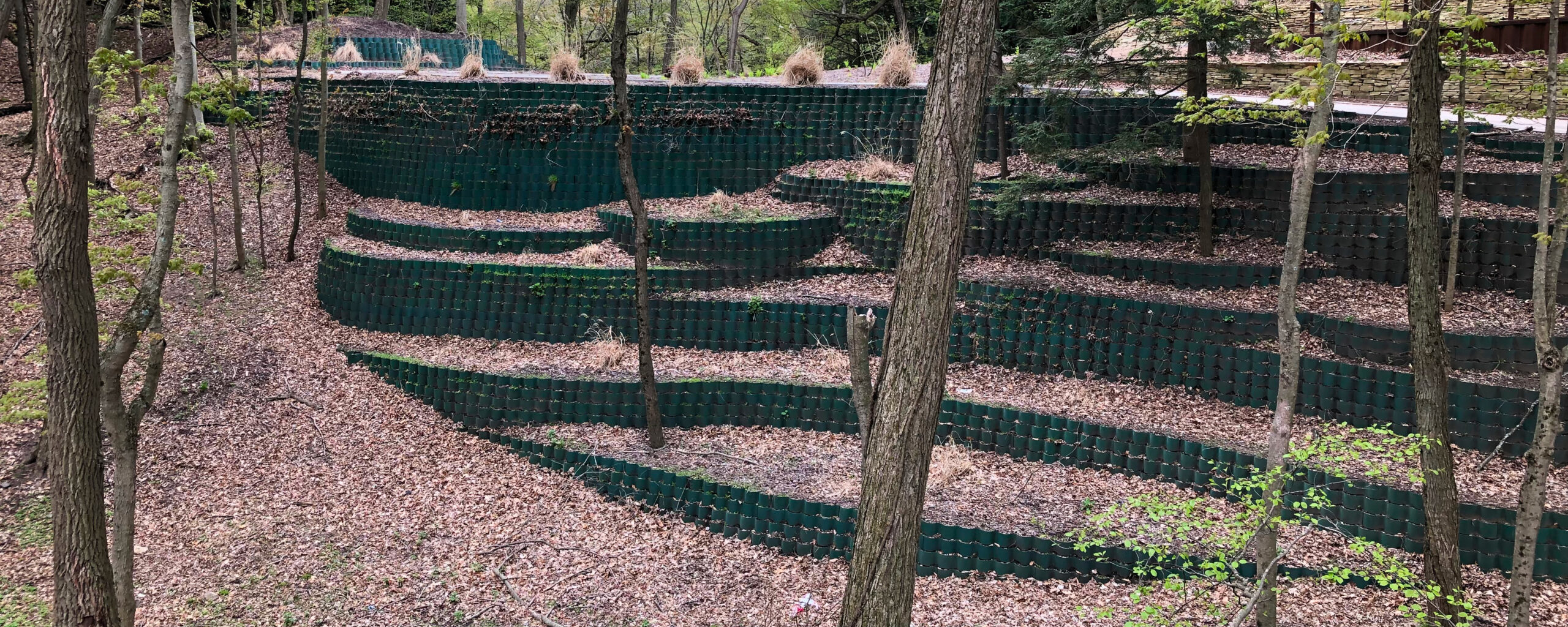
Titan Earth Slope®
Titan Earth Slope® MSE systems are flexible and durable, providing a cost-effective solution for constructing slopes with a batter up to 70 degrees.
MSE Wall & Slope FAQs
Why are mechanically stabilized earth (MSE) walls and slopes commonly used in several industries?
What materials make up an MSE wall or slope system?
Facing materials: These are the visible-facing materials that form the outer layer of the wall or slope. They can be made of a wide range of materials, such as concrete panels, modular blocks, welded wire forms, geocells, silt socks, geogrid, or erosion control blankets. Almost all slope applications can be vegetated to help with carbon
sequestration, retain runoff, reduce carbon footprint, and provide sustainable development.
Reinforcement materials: These are the materials that provide the structural support for the wall or slope. They include geosynthetic materials such as geogrids or geotextiles, metallic strips, or soil anchors with tendons. Geogrids are highly advantageous when dealing with granular backfill with highly alkaline materials.
Fill materials: Backfill material typically consists of free-draining granular material or select on-site soils in the reinforced zone. This material is placed in lifts and compacted into place between layers of reinforcement. Various on-site soils can be used but special consideration is required, typically adding extra drainage layers
throughout the system. The functionality and project requirements determined by the engineer will typically dictate whether on-site soil or granular soil should be used.
Drainage materials: Drainage material is placed within MSE systems to facilitate drainage. They are highly recommended when conditions of high water table or excessive water seepage from the backcut slope exist. These materials consist of perforated pipe, geocomposites, or clear stone wrapped in a geotextile.
Geogrids: Geogrids are typically made of high-strength polymers or fibers that can provide a strong and durable reinforcement element for the MSE wall or slope. In addition to their resistance to alkaline soils and UV resistance, they are also flexible, easy to work with, and cost-effective.
What key factors affect the structural integrity of an MSE wall or slope?
There are several factors that can threaten the integrity of an MSE wall or slope structure. These include:
Soil Bearing Capacity: The bearing capacity of the soil refers to the maximum load that the soil can support without failure. If soil bearing capacity is insufficient, soil improvement or remediation may be necessary to provide adequate strength. Some techniques can include the removal and replacement of soft soils, incorporating a
matrix of geogrid and compact granular layers, or deep foundation solutions to support the weight of the MSE wall or slope.
Soil Drainage: Soil drainage can affect the stability and long-term performance of the MSE wall or slope. Poorly drained soils can lead to water build-up, increasing the lateral pressure, and reducing the stability of the structure. A drainage system may need to be incorporated into the design to manage runoff and prevent water
build-up.
Seismic Activity: Seismic activity, such as earthquakes, can cause the ground to shift and can potentially damage the MSE wall or slope structure.
What should be considered during the design and construction phase to mitigate the factors that can threaten the structural integrity of MSE walls and slopes?
Ensure proper site evaluation and design: Proper design is critical for the stability of an MSE wall or slope structure. Engineers must carefully evaluate the site conditions and select appropriate reinforcement elements and construction techniques to ensure a stable and durable system. Take the settlement and bearing capacity of the foundation soils into consideration.
Ensure proper drainage: Proper drainage is critical to prevent water buildup and erosion, which can weaken the structure. Engineers should incorporate appropriate drainage techniques into the design, such as drainage blankets, pipes, or French drains.
Ensure proper seismic design parameters: If the project site is located in an active seismic zone, engineers must design using the proper seismic parameters for that specific region to mitigate the risk of failure during a seismic event.
What should be done after construction to ensure the long-term performance and durability of an MSE wall or slope?
Proper Construction Techniques & Quality: Proper construction techniques and quality control can ensure the long-term performance and durability of the MSE wall or slope. Proper compaction and proper installation of geosynthetic reinforcement, such as maintaining tension throughout the geogrids and installing drainage systems, are key.
Performance Monitoring: Regular monitoring can help engineers identify any potential issues with the MSE wall or slope and take corrective action. This can include monitoring for settlement, deformation, cracks, or drainage issues. Monitoring can be done through visual inspections, and instrumentation such as strain gauges or settlement plates, or through automated monitoring systems.
Proper Maintenance: Proper maintenance of the MSE wall or slope can also help ensure long-term performance and durability. This can include regular inspection and cleaning of drainage systems, repair of any damage or deterioration, and replacement of any failed or damaged geosynthetic reinforcement.
How can Titan assist engineers in determining the best MSE wall or slope structure for their project?
MSE team will provide hands-on, on-site support to ensure the installation crew has a solid understanding of how the MSE system is built.